


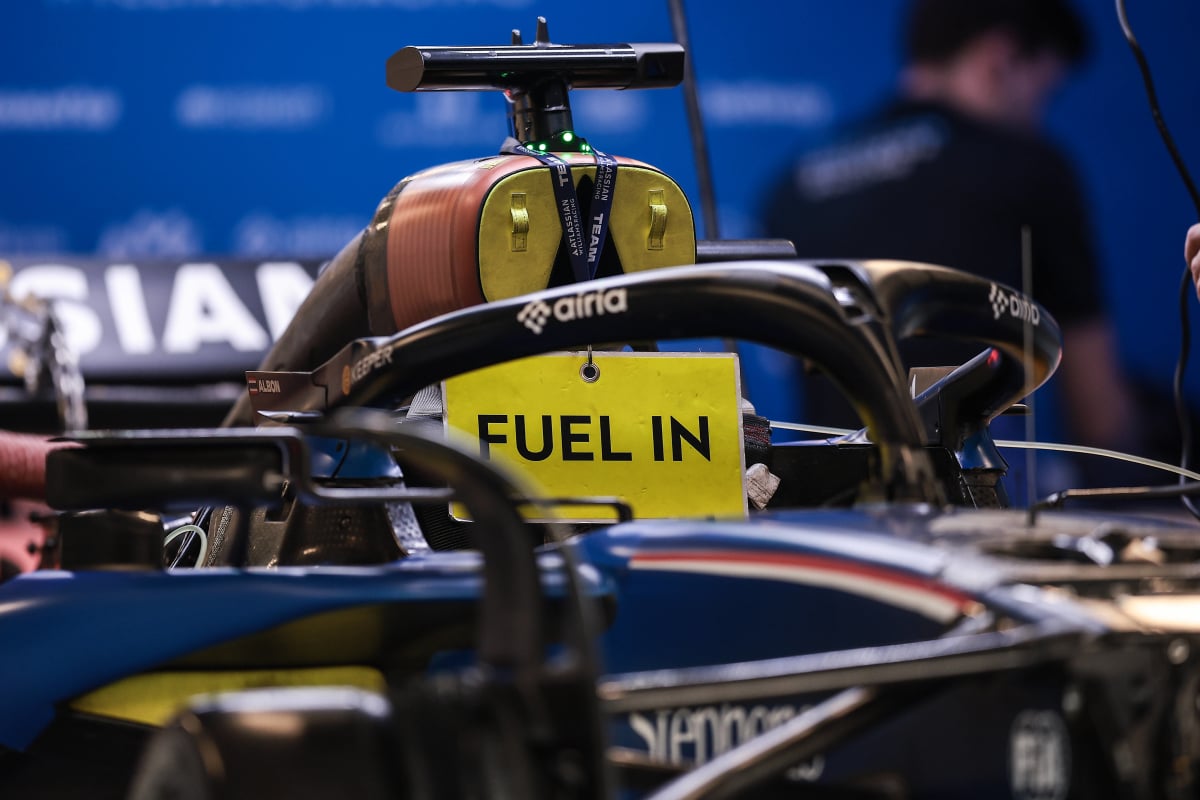

Five F1 teams are facing fuel nightmare at Australian Grand Prix
There are new fuels entering F1 this year

Several F1 teams could face a major performance inhibitor at the season-opening Australian Grand Prix at Albert Park, with reports suggesting that not all of the fuel suppliers have received homologation.
2026 is seeing wholesale power unit regulation changes sweeping into the sport, with the new power units having an almost exact 50-50 split between electrical power and the internal combustion engine (ICE).
But this year, the ICE is able to run off entirely 100 per cent sustainable fuels, helping F1 to reach their goal of carbon neutrality by 2030.
These 'advanced sustainable fuels' were already trialled in F2 and F3 in 2025, and the fuel is made from sources such as carbon capture, municipal waste and non-food biomass, to adhere to the stricter guidelines.
During the pre-season testing events in Barcelona and Bahrain, the sustainable fuels were not quite ready, meaning all teams used fossil fuels for these nine days of running.
And a new report from AutoRacer.It has revealed only three of the five fuel suppliers of the power unit manufacturers have actually received homologation certification ahead of the new season.
As per the report, Ferrari, Audi and Red Bull's fuel suppliers Shell, BP and ExxonMobil have all received homologation of their sustainable fuels ahead of the March 1 deadline, but Petronas - who supply the Mercedes power units - are in a race against time to achieve this certification.
It's unclear where Aramco are on their sustainable fuel preparations for 2026, with the Saudi Arabian company supplying Honda's power units.
But all of this means Mercedes, McLaren, Alpine, Williams and Aston Martin's ability to use sustainable fuels at the season-opening Australian GP is not yet confirmed, and if they are not certified by March 1, these teams will have to use temporary fuel, which would cause a performance deficit.
READ MORE: FIA announce official F1 vote over Mercedes compression ratio controversy
What is homologation and how do F1 fuel suppliers receive it?
Homologation is the official certification process in which a product is approved by an authority as compliant with specific safety, environmental, and technical standards.
In F1 in 2026, this involves the verifying of the entire production process, to ensure that the fuels are safe and that it is genuinely a sustainable product that is being burned in the ICE.
The 2026 process of homologation in F1 is arguably harder than it has ever been, with the FIA hiring British company Zemo for the process, and putting a strict deadline of March 1 on the certification process.
The entire supply chain is subject to controls by Zemo, with staff visiting the production facilities directly to ensure that each stage complies with the criteria established by the FIA regulations. The certifications of individual molecules and any partners involved in the supply chain are also being examined this year.
Once Zemo and FIA are happy with the fuel-making process and the end product itself, fuel suppliers are given an official certificate confirming homologation, and it's this certificate that Petronas are yet to be in possession of.
F1 HEADLINES: Hamilton questioned as Ferrari take advantage of 2026 'loophole'
Related
More F1 news
Latest F1 news



Recommended by the editors
 Mercedes F1
George Russell 'facade' called out as Mercedes war looms large
 Ferrari F1
Charles Leclerc 'hires private team' for Ferrari F1 investigation
 Mercedes
Mercedes star reveals F1 rivals have been granted FIA lifeline
 Lewis Hamilton
Lewis Hamilton missed Ferrari meetings, why things are better now







Races
-
 Grand Prix of Australia 2026
-
 Grand Prix of China 2026
-
 Grand Prix of Japan 2026
-
 Grand Prix of Bahrain 2026
-
 Saudi Arabian Grand Prix 2026
-
 Miami Grand Prix 2026
-
 Grand Prix du Canada 2026
-
 Grand Prix De Monaco 2026
-
 Gran Premio de Barcelona-Catalunya 2026
-
 Grand Prix of Austria 2026
-
 Grand Prix of Great Britain 2026
-
 Grand Prix of Belgium 2026
-
 Grand Prix of Hungary 2026
-
 Dutch Grand Prix 2026
-
 Grand Prix of Italy 2026
-
Gran Premio de España 2026
-
 Grand Prix of Azerbaijan 2026
-
 Grand Prix of Singapore 2026
-
Grand Prix of the United States 2026
-
 Gran Premio de la Ciudad de Mexico 2026
-
 Grande Prêmio de São Paulo 2026
-
Las Vegas Grand Prix 2026
-
 Qatar Grand Prix 2026
-
 Grand Prix of Abu Dhabi 2026
Follow us on your favorite social media channel
Editorial & corporate information

Avenue HQ
10–12 East Parade
Leeds
LS1 2BH
United Kingdom Regional correspondence
View contact page