


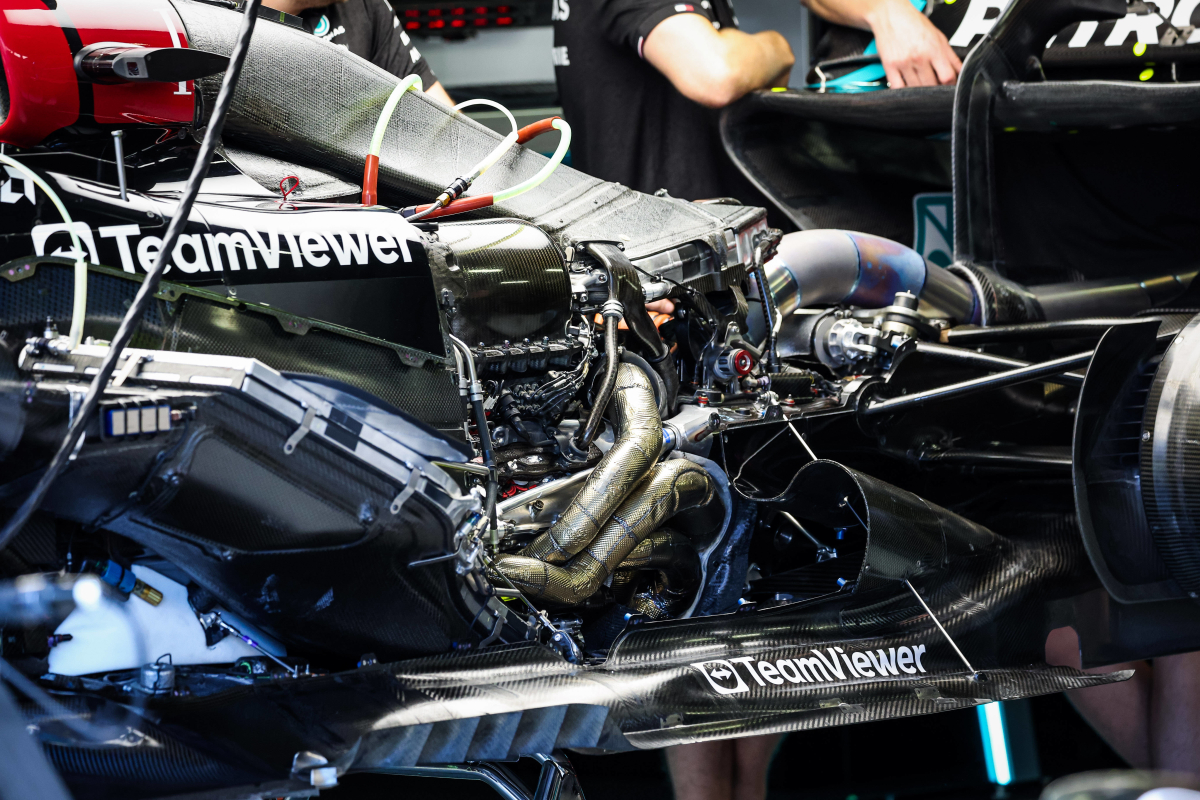
F1 2026 Regulations: What is the Energy Recovery System?

F1 2026 is seeing a plethora of regulation changes sweeping into the sport, both on the chassis side of things and through the new power units.
Although remaining a 1.6-litre V6 turbo hybrid as they have been since 2014, F1 power units have seen the emphasis on electrical energy tripled in 2026 - from 120kW to around 350kW - which means there is an almost exact 50/50 split between the battery and the internal combustion engine (ICE).
This means the energy recovery system (ERS) within the power units is even more important than it has been in previous years, and there is added responsibility on the drivers to manage their battery capacity.
The new ERS can harvest twice as much energy per lap as it could in 2025, helping to recharge the battery throughout the course of the lap. But what exactly is the energy recovery system, and how does it work?
F1 2026 Regulations: What has happened to the MGU-H?
What is ERS in F1?
The energy recovery system (ERS) is one of the components on the hybrid power unit that harvests wasted energy and uses it to recharge the battery.
F1 drivers are able to recover charge to their battery via a mixture of different ways (more on this later), and this energy gets stored in a lithium-ion battery pack.
This harvested energy can then be utilised via a 'boost button' on the drivers' steering wheel which, when pressed, gives drivers additional horsepower, with the power unit either returning to maximum power or a profile which has been configured by the team, allowing the car to utilise its full 450 horsepower.
How does ERS work?
The ERS consists of three main components: the control electronics (CE), the energy store (ES), and the motor generator unit - kinetic (MGU-K), which is arguably the most important component of the whole system.
F1 has waved goodbye to the motor generator unit - heat (MGU-H) which previously worked in tandem with the MGU-K but was expensive to produce and maintain, and didn't actually produce particularly big gains in power output.
The MGU-K, however, is the way in which the ERS is able to recover energy through the process of braking and accelerating.
When a driver brakes, the MGU-K acts as a generator, creating electricity as the car slows itself down. This excess electrical energy is then transferred to the energy store, where it is stored in a lithium-ion battery pack until it is needed.
The aforementioned control electrics manages energy flow, and converts the electrical energy from AC to DC power, to be used as the driver presses the boost button on their steering wheel.
There are four ways in which drivers are able to harvest energy through the MGU-K: braking, when racing on part throttle, lifting and coasting, as well as 'super clipping', which happens at the end of a straight when the car is at full throttle.
What are the changes to ERS in F1 2026?
Drivers in 2026 will be more keen to harvest energy throughout the course of the laps, with the electrical energy side of the power unit being worth so much more this year.
The ERS from 2026 onwards can recharge the battery with up to 9MJ (megajoules) per lap, doubling the previous capacity.
This offers drivers more opportunities to be able to utilise the car's full 450 horsepower, but only if they're cautious with their battery capacity.
Drivers will likely need to do more lifting and coasting without the presence of the MGU-H, and this may even be the case during a single qualifying lap as they try to utilise their boost mode on the straights.
READ MORE: FIA announce compression ratio decision after Mercedes F1 engine controversy
Related

Latest News

F1 issues statement about Bahrain and Saudi Arabian GPs after Iran missile attacks
- 38 minutes ago

F1 2026 Regulations: What is the Energy Recovery System?
- 1 hour ago

F1 News Today: Lewis Hamilton issues warning over ‘real test’ as Ferrari fumble could cost 2026 title
- 1 hour ago

Hit Netflix F1 Drive to Survive show added to new streaming platform
- 2 hours ago

F1 2026 WAGs: Lewis Hamilton latest, Norris breakup and Leclerc got married?
- 3 hours ago

Did F1 star Charles Leclerc and Alexandra Saint Mleux just get married? Fans go wild over stunning video
- 3 hours ago
Most read

Lewis Hamilton finally breaks his silence on Kim Kardashian dating rumours
- 12 february
F1 2026 WAGs: Lewis Hamilton latest, Norris breakup and Leclerc got married?
- Today 14:10

FIA 'will ban' Mercedes engine trick following rivals uproar
- 16 february

F1 Drive to Survive Season 8: Netflix release time, episodes and big storylines
- 26 february

Best F1 Fantasy 2026 Team Names: Funny names and puns for the new season
- 24 february

F1 Testing 2026: Bahrain schedule, start times and how to watch live
- 12 february

F1 Standings




Races
-
 Grand Prix of Australia 2026
-
 Grand Prix of China 2026
-
 Grand Prix of Japan 2026
-
 Grand Prix of Bahrain 2026
-
 Saudi Arabian Grand Prix 2026
-
 Miami Grand Prix 2026
-
 Grand Prix du Canada 2026
-
 Grand Prix De Monaco 2026
-
 Gran Premio de Barcelona-Catalunya 2026
-
 Grand Prix of Austria 2026
-
 Grand Prix of Great Britain 2026
-
 Grand Prix of Belgium 2026
-
 Grand Prix of Hungary 2026
-
 Dutch Grand Prix 2026
-
 Grand Prix of Italy 2026
-
Gran Premio de España 2026
-
 Grand Prix of Azerbaijan 2026
-
 Grand Prix of Singapore 2026
-
Grand Prix of the United States 2026
-
 Gran Premio de la Ciudad de Mexico 2026
-
 Grande Prêmio de São Paulo 2026
-
Las Vegas Grand Prix 2026
-
 Qatar Grand Prix 2026
-
 Grand Prix of Abu Dhabi 2026
Follow us on your favorite social media channel
Corporate information
 Innovatieweg 20C
7007 CD, Doetinchem, Netherlands
+31 6 455 168 60
See the Contact page for regional correspondence addresses