



F1 2026 Engines: All you need to know ahead of the new season
There are a couple of new power unit manufacturers in F1

With the new Formula 1 campaign just around the corner, the 2026 season is set to usher in a wave of significant changes — not least in the partnerships between teams and their power unit suppliers.
A sweeping overhaul of the regulations is creating challenges across the 11-team grid, as major revisions to power units and aerodynamics mark the sport’s most substantial reset since 2014.
The updated power units will place three times more focus on electrical energy, while the cars themselves will be slimmer, lighter, and more compact than their 2025 counterparts. These changes are aimed at improving on-track competition and supporting Formula 1’s push toward carbon neutrality by 2030.
These new regulations have encouraged a new team to get on board, with Cadillac joining as the 11th outfit on the grid, while German car manufacturer Audi have joined F1 for the first time as both a power unit manufacturer and as a works team, taking over the Sauber outfit at the end of 2025.
But in this new era for the sport, which power unit manufacturers are supplying which teams?
Which engine will each team use in F1 2026?
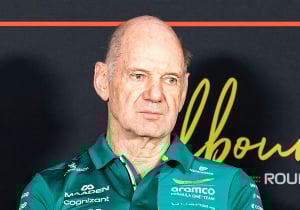
Honda will instead supply the Aston Martin team with power units, as the Silverstone-based outfit look to become a championship-contending team.
Ferrari are another power unit manufacturer in the sport in 2026, and they are supplying the works team, Haas and Cadillac.
The fifth power unit manufacturer are of course Mercedes, who supply the most teams, with McLaren, Williams, Alpine and the works Mercedes team on their list of customers in 2026.
| Team | Engine |
|---|---|
| Red Bull | Red Bull Powertrains |
| Racing Bulls | Red Bull Powertrains |
| Ferrari | Ferrari |
| Haas | Ferrari |
| Cadillac | Ferrari |
| Alpine | Mercedes |
| Mercedes | Mercedes |
| Williams | Mercedes |
| McLaren | Mercedes |
| Aston Martin | Honda |
| Audi | Audi |
How do the new F1 power units work?
So we've already established that the emphasis on electrical energy is being tripled in 2026, which means that there is an almost exact 50-50 split between electrical energy and the internal combustion engine.
What's more, the internal combustion engine side of the power unit will be able to run off 100 per cent sustainable fuels.
F1 engines will remain a 1.6-litre V6 turbo hybrid, but the car’s Energy Recovery System (ERS) can now recharge the battery with twice as much energy per lap, as F1 waves goodbye to the MGU-H.
Increased energy will also be made available to help aid overtaking, which will act as a replacement for DRS, being able to be utilised when in a battle for position.
So called 'overtake mode' will be available to drivers who are within one second of the car in front at activation points. These activation points will then trigger more electrical energy to aid overtaking or defence.
Drivers will push a 'Boost' button to activate the mode, but only if they have enough charge of the battery, making the management of the battery and ERS absolutely crucial in 2026. Drivers can use the boost all at once, or spread across a lap.
What is the F1 2026 engine loophole controversy about?
The winter break in F1 has seen controversy shrouding the FIA's new power unit regulations, with reports circling that Mercedes have allegedly found a 'trick' which could be worth up to 0.3 seconds per lap.
The alleged trick regards the geometric compression ratios, with it being reported that Mercedes have found a way for the compression ratio to be at the allowed 16:1 when the engine is stationary, but then increase to the previously allowed 18:1 when moving, something that could allow an extra 15 brake horsepower.
Other power unit manufacturers have reportedly called on the FIA to clarify the new rules regarding geometric compression ratios, while the sport's governing body have confirmed two meetings to be taking place to discuss the matter with technical experts.
FIA single-seater director Nikolas Tombazis recently stated that it was a 'top priority' to ensure that there wouldn't be any protests on the race result at the Australian Grand Prix, wanting to clarify the rules for all teams before the start of the season.
Head of the Audi F1 project Mattia Binotto recently had his say on the alleged 'trick' found by Mercedes, stating: "If that's true, firstly, it certainly makes a significant difference in terms of performance and lap time. That would definitely make a difference when we get to the track and competition."
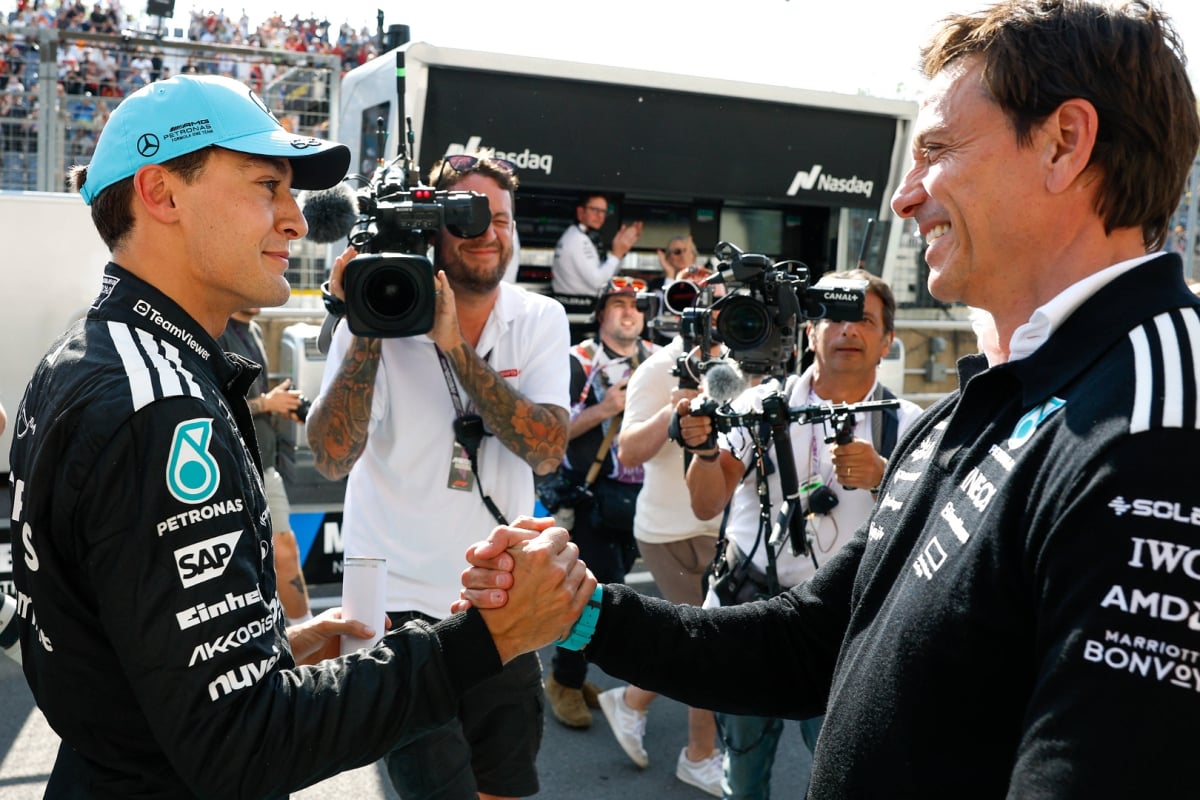
Meanwhile, Mercedes boss Toto Wolff issued a staunch defence of his team, saying: "I just don’t understand that some teams concentrate more on others and keep arguing a case that is very clear and transparent.
"Communication with the FIA was very positive all along, not only on compression ratio but other things too. Specifically in that area, it’s very clear what the regulations say, what the standard procedures are.
"So just get your s*** together. Doing secret meetings and letters, and inventing ways of testing which don’t exist… I can just say at least from us, we’re trying to minimise distractions and that’s looking more at us, not everybody else."
Related
More F1 news
Full News Feed

Recommended by the editors
 Lewis Hamilton
Lewis Hamilton and Kim Kardashian spotted together again ahead of Japanese GP
 F1 Stories
Brazilian GP chaos as sinkhole forces major delay at circuit
 Mercedes
Mercedes break silence following shock disqualification setback
 Aston Martin
Aston Martin slammed over Honda issues as blame game takes new turn




Races
-
 Grand Prix of Australia 2026
-
 Grand Prix of China 2026
-
 Grand Prix of Japan 2026
-
 Grand Prix of Bahrain 2026
-
 Saudi Arabian Grand Prix 2026
-
 Miami Grand Prix 2026
-
 Grand Prix du Canada 2026
-
 Grand Prix De Monaco 2026
-
 Gran Premio de Barcelona-Catalunya 2026
-
 Grand Prix of Austria 2026
-
 Grand Prix of Great Britain 2026
-
 Grand Prix of Belgium 2026
-
 Grand Prix of Hungary 2026
-
 Dutch Grand Prix 2026
-
 Grand Prix of Italy 2026
-
Gran Premio de España 2026
-
 Grand Prix of Azerbaijan 2026
-
 Grand Prix of Singapore 2026
-
Grand Prix of the United States 2026
-
 Gran Premio de la Ciudad de Mexico 2026
-
 Grande Prêmio de São Paulo 2026
-
Las Vegas Grand Prix 2026
-
 Qatar Grand Prix 2026
-
 Grand Prix of Abu Dhabi 2026
Follow us on your favorite social media channel
Editorial & corporate information

Avenue HQ
10–12 East Parade
Leeds
LS1 2BH
United Kingdom Regional correspondence
View contact page