


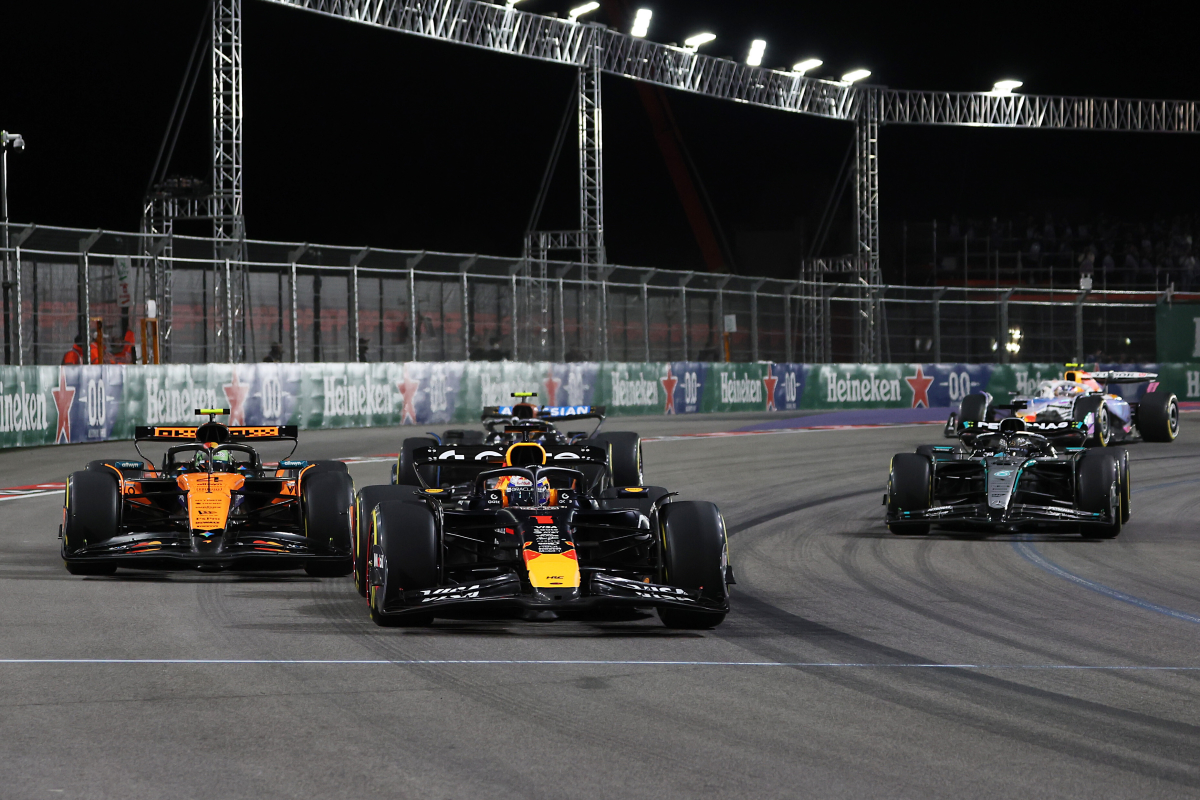


3 races left to go: F1 is back in the US for the Las Vegas Strip Circuit Grand Prix
The end of the F1 season is in sight. We’re heading into one of the wildest parts of the F1 season, because somehow there are only three races left, and one of them is this weekend’s Las Vegas Grand Prix. And to be honest, Vegas is a race that still feels a bit “new” even though we’ve already seen it a couple of times now. Vegas is one of those tracks where you never know what you’re going to get. In this article, you’ll find a deep dive into all things F1, so you are fully ready to experience the next few races knowing exactly what’s what.
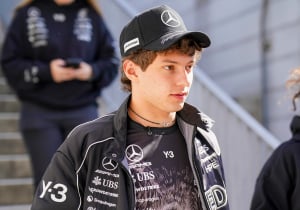
Before we get into the track stuff, let’s take a second to remember how we got here. The last round in São Paulo gave us a Norris–Antonelli–Verstappen podium. That alone tells you how crazy this season has been. Antonelli surprised a lot of people last weekend. He really seems to be settling in nicely. He looked relaxed, didn’t overdrive, and didn’t get pulled into mistakes, he just handled it. And you can tell when a driver isn’t forcing it anymore. It gave the impression that we might be seeing a lot more of Antonelli on the podium.
Ferrari, on the other hand, had one of those weekends that are better left alone. Both cars are out, no points, nothing to build from. That’s really all there is to say about it, it just didn’t come together at any point.
And then Piastri ended up with a penalty after making contact, so his race basically derailed too. If you look up the USA Grand Prix betting odds, you would be surprised at what you see.
The talk of the town is obviously McLaren. Somehow, this team has become top of mind when it comes to F1 performance. The team is currently sitting at 770 points, while Mercedes, as the number two, only has 441. An insane accomplishment, to be fair. McLaren basically has the constructors' championship in the bag, that’s safe to say. Nevertheless, these last few races will definitely not be boring.
Vegas is a race to behold. As a fan of street circuits, I think that Vegas is one of the most exciting ones in the game. Vegas always delivers the unexpected, partially because there is a lot of space for overtakes. Normally, in a city circuit, the walls are so close you feel like you need to hold your breath while watching. Vegas is different, there are plenty of spaces where cars can overtake, making it even more exciting. It completely changes how drivers plan their overtakes because they know there’s actually room to fight without immediately ending up against the wall.
Another fun detail: the track runs anti-clockwise. Most fans don’t care, but drivers definitely feel that in their bodies. It puts different pressure on the neck and shoulder muscles. And when you’re doing that for close to two hours, at these speeds, in cold night air? Best believe you can feel that.
The nitty-gritty of the Vegas track
Turn 1 is one of those corners that always looks more dramatic from the onboard than on the track map. It’s tight, the field bunches up instantly, and if someone tries to get clever and brake late, it creates a ripple effect for the next three corners.
The run onto Koval is long and simple in theory, but because they’re building so much speed, the braking point at turn 5 sneaks up on people. Every year, you see at least one driver overshoot it during free practice because they underestimate how quickly the car accelerates there.
The part around the Sphere (turns 7, 8, and 9) looks cool because of the visuals, but honestly, it’s not that comfortable to drive. Those corners weren’t added for flair. They’re tight enough that if you mess up turn 7, then 8 is ruined, and then 9 is ruined, and then you’re going down the straight frustrated because you’ve basically thrown away half a lap. Drivers are not too happy about that section.
Down the Strip, the slipstream is huge. You see it immediately: once a car gets close, the gap shrinks quicker than you expect, and it almost seems like the driver barely has to do anything. Because of that, they start setting the run-up early, not just the corner before, sometimes two or three corners ahead, just trying to make sure the exit lines up the way they need it.
All of that speed eventually dumps them into turn 14. This turn is no joke, they arrive with a lot of speed from the straight, making it an extremely tough brake. Most mistakes around this circuit tend to start right there, usually from a small misread of how much the car will slow down on cold brakes.
You go from one of the highest speeds of the season to a slow-ish corner, and because the temperature always drops at night (and in Vegas, it can drop quite a bit), the brakes and tires never feel fully right. Lock-ups are super common. Flat spots, too. So the radio will usually blow up on this part.
The last section of the lap isn’t much to look at, but it matters more than people think. If your exit is bad there, you drag that mistake all the way down the main straight. It may not be that exciting, but it sure is important.
Setting everything up right
The tires are always the tricky part here. Once the evening hits, the temperature just falls away, and the track cools with it. That’s when the tires stop waking up quickly. They take longer than teams expect, even when the cars are pushing. It’s why the first couple of laps look a bit unsettled. The tires are not gripping properly, and the drivers are still getting a feel for how the car sits. Obviously, they practice, but the temperature is really a different beast in Vegas.
Problem number two: engine power. The Strip straight rewards teams with strong power units, meaning Mercedes, Red Bull, and Ferrari could have an advantage here if they manage to use it.
Third: brakes. As mentioned before, the turn 14 zone is very hectic. The brakes overheat easily because the straight is so long. On top of that, if the tires are cold, they lock instantly. Drivers have to manage that all race long, and teams often leave more cooling open here than they would anywhere else.
Fourth: track evolution. On Friday, the track looks like a dusty runway. FP1 usually gives nothing. FP2 gets a little better. By FP3, you finally start seeing something close to what we’ll get in qualifying. The amount of grip that appears between sessions is crazy to see. Early practice does not offer a lot of input to build on. And fifth: safety cars. This race almost always has at least one. The combination of long straights and tight braking points means someone will usually misjudge something. And because the barriers are close and the run-off isn’t great, Race Control doesn’t take chances.
Now, when we talk about drivers who might do well here, there are a few obvious names. Norris will want to extend his lead. Antonelli got a well-deserved confidence boost in Brazil and might want to keep up that momentum. Verstappen is always a factor, even on his off days. Basically, lot’s to be excited about.
What each sector has to offer
Sector 1 is always messy early in the weekend. The front tires don’t have enough. grip, the cars slide wide, and drivers complain about understeer a lot. Ferrari and Red Bull usually handle this better because their cars are strong at the front. Sector 2 is where you get the bumps. Especially around the Sphere. If the car hits them wrong, you get a snap of oversteer instantly. Power doesn’t matter here as much as actual mechanical grip.
Sector 3 is where, honestly, most of the race happens. That long straight. The braking into turn 14. This is where most of the fights and mistakes happen, making it extremely nerve-wracking to watch. Cold tires make the braking distances unpredictable, and that just makes the whole thing even more chaotic.
What is not to be forgotten here is the climate. The temperature drops in Vegas are no joke. There’s no other track on the calendar where the conditions change this dramatically. It’s why teams are always careful when they talk about race pace after FP2, they know very well the car might behave completely differently once the sun is gone.
Vegas is a race that is not to be missed. Especially in this season, no one could have predicted what’s been happening so far, and Vegas obviously won’t be an exception. Obviously, as a true F1 fanatic, you will have the front seat to the race, whether that is from the stands or on your TV. The season is very close to the end, but that doesn’t take away any excitement.
Get yourself ready, look up the expert betting picks and predictions for USA Grand Prix, and place a bet. Put your expert knowledge to the test and see if you can predict the unpredictable!
Related
More F1 news
Full News Feed
Recommended by the editors




Races
-
 Grand Prix of Australia 2026
-
 Grand Prix of China 2026
-
 Grand Prix of Japan 2026
-
 Grand Prix of Bahrain 2026
-
 Saudi Arabian Grand Prix 2026
-
 Miami Grand Prix 2026
-
 Grand Prix du Canada 2026
-
 Grand Prix De Monaco 2026
-
 Gran Premio de Barcelona-Catalunya 2026
-
 Grand Prix of Austria 2026
-
 Grand Prix of Great Britain 2026
-
 Grand Prix of Belgium 2026
-
 Grand Prix of Hungary 2026
-
 Dutch Grand Prix 2026
-
 Grand Prix of Italy 2026
-
Gran Premio de España 2026
-
 Grand Prix of Azerbaijan 2026
-
 Grand Prix of Singapore 2026
-
Grand Prix of the United States 2026
-
 Gran Premio de la Ciudad de Mexico 2026
-
 Grande Prêmio de São Paulo 2026
-
Las Vegas Grand Prix 2026
-
 Qatar Grand Prix 2026
-
 Grand Prix of Abu Dhabi 2026
Follow us on your favorite social media channel
Editorial & corporate information

Avenue HQ
10–12 East Parade
Leeds
LS1 2BH
United Kingdom Regional correspondence
View contact page