


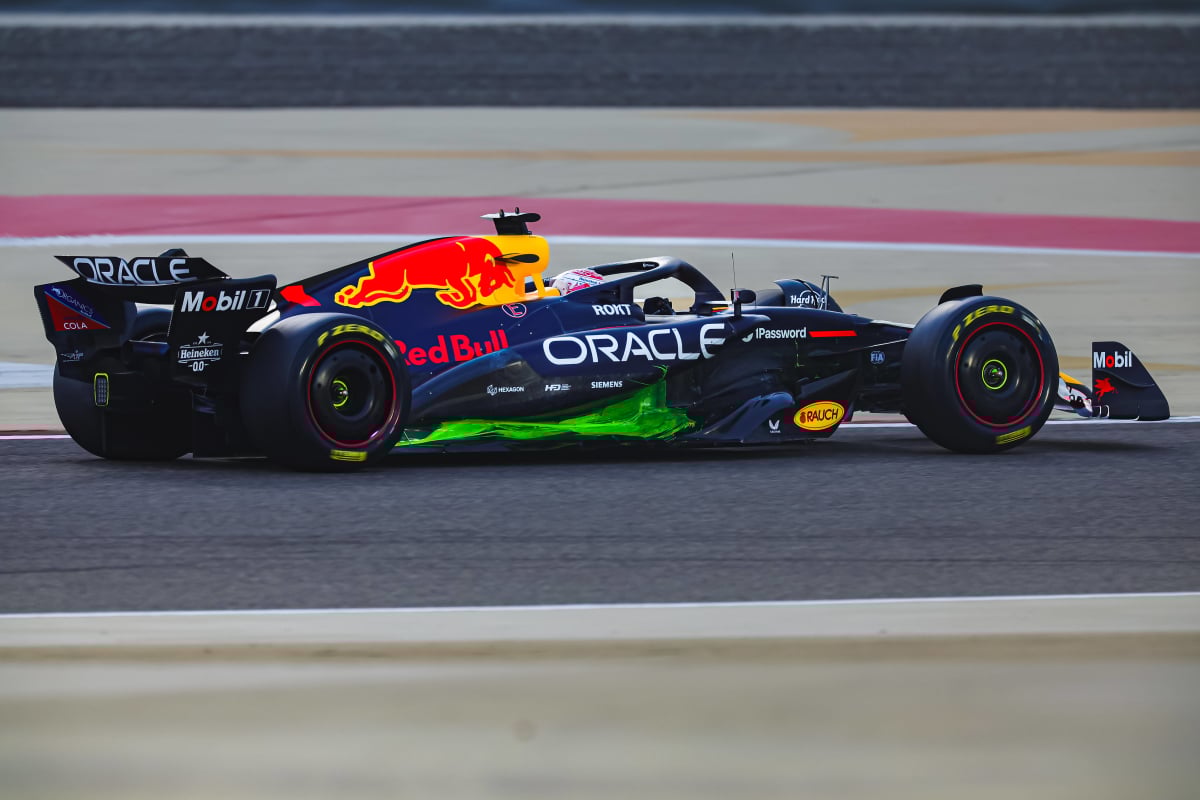
Why predicting Formula 1 has become a nightmare
There was a time when you could look at a Formula 1 weekend and have a pretty good idea of how it would go. A dominant car stayed dominant. A struggling team usually stayed where it belonged. The grid looked very similar weekend after weekend. Those days are done and dusted. These days, one small mistake can drop you from the front row straight into the midfield. It can take less than half a second to completely change the outcome of the race. Predicting F1 is no longer a bit of science and probability. It's nearly impossible.
When tiny gains cause big problems
Teams no longer chase huge performance jumps. Those disappeared years ago. What they’re really fighting over now are microscopic gains, spread across hundreds of systems that constantly influence each other. Change the front wing, and you might gain downforce, but that same change can quietly mess with tyre temperatures. Some issues are picked up right away and others are so inconsistent that you don't know until after the damage is done.
At this level, tiny issues can turn into big problems very quickly. One weekend you’re fighting for a podium. The next, you’re stuck on the bottom of the grid wondering what went wrong. It’s why even betting markets have tightened up so much. A quick look at what online betting at NetBet looks like shows just how hard it has become to separate the front runners. One small setup error is often enough to flip the entire order.
Same cars, different tracks, different stories
Circuit characteristics play a bigger role than ever. Each driver has a favorite circuit, not because of the destination but very much so because of the track. A car that does well in Vegas may flop in Bahrain. Aerodynamic concepts don’t translate evenly anymore. Teams rely heavily on simulations, but the connection between virtual data and real asphalt isn’t always clean. Sometimes all the circumstances come together in a perfect way. Sometimes things hit the fan from the first second of the first lap. You never know what you are going to get.
Weather just makes an already messy picture even messier. A couple of degrees either way can knock the tyres off balance. Grip doesn’t feel the same, the car reacts differently, and the strategy that once seemed so solid is now obsolete. Teams look at the forecasts, sure, but nobody fully trusts them. Right up until the session starts, there’s still a lot of guessing done.
Tyres: the quiet source of chaos
But more often than not, something unexpected puts a flag in the play. Graining. Blistering. Degradation that doesn’t match the numbers. The plan may have been great, but when does anything ever go according to plan in F1? The plans may look good on paper, but reality is hardly ever as expected. No matter how good the plans are. Safety cars, undercuts, and tyre life: one unexpected twist and the plan is done for.
Brains over brute force
Winning a race isn't about simply slamming the gas. It takes strategy and a lot of difficult decisions. Teams have to choose: push everything into one lap or keep something in reserve for another run. One small choice can change the entire outcome of a race. Then there are consequences. Push the limits, and something can break. Play it safe, and you leave lap time on the table. As fans, a win can look simple, but inside the garage, everyone knows how much luck and chance were actually involved in that win. And with constant new technologies like hybrid power units, the decision-making process is a real doozy.
Data everywhere, certainty nowhere
Big data is no stranger to F1. Engineers at all teams sift through insane amounts of data to make one tiny adjustment we'll never see or understand. Without heavy filtering and automation, it would be impossible to keep up. Teams that react fastest gain an edge, but even that advantage doesn’t last long. Old data becomes outdated more quickly than ever. Machine learning can help spot patterns, sure, but it can’t come up with complete strategies designed for success. The real challenge in predicting F1 is that all the low-hanging fruit have been cut, and we are now operating in the 0.1% of F1. Teams are making the tiniest changes and seeing what the outcome is. And we are just along for the ride.
Related

Latest News

Sebastian Vettel to return to F1?! Here's what he's said about it
- Yesterday 23:00

F1 Movie wins MAJOR award amid sequel talks
- Yesterday 21:01

Aston Martin face bleak future amid Honda struggles
- Yesterday 19:00

US F1 fans can watch races at the movies
- Yesterday 17:01

The Ferrari F1 howler that could disrupt Lewis Hamilton's preparations
- February 22, 2026 23:00

F1 2021 Abu Dhabi GP: Controversial car that saw Lewis Hamilton title loss on SALE for £600,000
- February 22, 2026 20:58
Most read

‘Fart into the mic’ and the end for Horner: Netflix drops epic F1 Drive to Survive trailer
- 13 february

F1 fans' overtaking fears highlighted by Bahrain testing video
- 21 february

Daniel Ricciardo could still make shock NASCAR move
- 12 february

Williams F1 team make 2026 debut
- 5 february

F1 star Kimi Antonelli crashes brand new Mercedes
- 10 february

Aston Martin ‘four seconds’ off the pace and Stroll delivers blunt verdict
- 13 february
F1 Standings




Races
-
 Grand Prix of Australia 2026
-
 Grand Prix of China 2026
-
 Grand Prix of Japan 2026
-
 Grand Prix of Bahrain 2026
-
 Saudi Arabian Grand Prix 2026
-
 Miami Grand Prix 2026
-
 Grand Prix du Canada 2026
-
 Grand Prix De Monaco 2026
-
 Gran Premio de Barcelona-Catalunya 2026
-
 Grand Prix of Austria 2026
-
 Grand Prix of Great Britain 2026
-
 Grand Prix of Belgium 2026
-
 Grand Prix of Hungary 2026
-
 Dutch Grand Prix 2026
-
 Grand Prix of Italy 2026
-
Gran Premio de España 2026
-
 Grand Prix of Azerbaijan 2026
-
 Grand Prix of Singapore 2026
-
Grand Prix of the United States 2026
-
 Gran Premio de la Ciudad de Mexico 2026
-
 Grande Prêmio de São Paulo 2026
-
Las Vegas Grand Prix 2026
-
 Qatar Grand Prix 2026
-
 Grand Prix of Abu Dhabi 2026
Follow us on your favorite social media channel
Corporate information
 Innovatieweg 20C
7007 CD, Doetinchem, Netherlands
+31 6 455 168 60
See the Contact page for regional correspondence addresses