



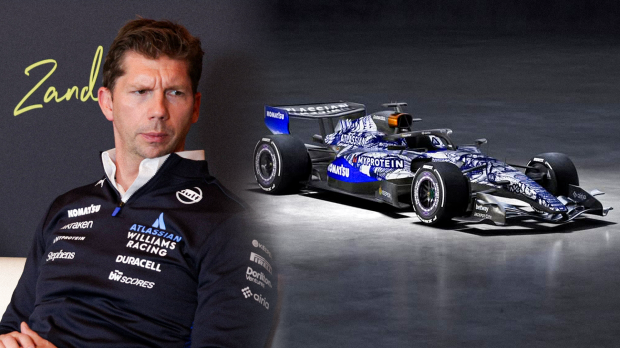

Williams team principal explains unexpected benefit of F1 cost cap
Williams boss James Vowles has admitted there was a benefit to missing the Barcelona shakedown

James Vowles has admitted that Williams could benefit from a healthier FIA cost cap position after choosing not to run their car during January’s Barcelona shakedown.
Williams were the only Formula 1 team to skip the private pre-season test last month, with Vowles’ squad explaining they would instead focus on an alternative preparation plan that includes independent on-track running and an expanded Virtual Track Testing (VTT) program.
While the Barcelona shakedown offered teams an early chance to identify potential issues with their new cars, that opportunity comes with significant expense — something expected to be a major factor in 2026, given the scale of the sport’s sweeping regulations overhaul.
Williams' engine provider Mercedes proved the reliability of their new power unit thanks to George Russell and Kimi Antonelli, who reportedly completed 500 laps in the W17 at the private event.
Williams could consider this a small win given they weren't able to test the new power unit with Alex Albon and Carlos Sainz in their own car at all in Barcelona.
Have Williams got 2026 F1 cost cap benefit after Barcelona absence?
But Williams didn't land in Barcelona at all and instead chose to focus all their attention back at the factory on ensuring their FW48 was ready for the official pre-season tests in Bahrain, which begin this week.
In a recent media appearance, team principal Vowles was asked if Williams saw any cost cap benefit from their Barcelona testing absence, or whether flights and hotels were non-refundable.
"So good news is, hotels and travel is an excluded cost cap cost," Vowles revealed, meaning the money Williams hypothetically saved from staying on the ground in the UK didn't actually give them any benefit compared to the other teams where the cost cap is concerned.
But the 46-year-old did explain how Williams could end up reaping the benefits of keeping their January preparations virtual, continuing: "Not running on track gives you a healthy cost cap benefit."
However, the British engineer quickly made his stance on the team's failure to make it to Barcelona clear, adding: "But I would much rather to be running on track, just to be clear, in that transition."
What is the F1 cost cap?
The cost cap signifies the maximum amount of money each F1 team is allowed to spend on their operation across a single year.
The figure is set by F1's governing body, the FIA, and was first introduced as a form of financial regulation in 2021.
Every season, each F1 team and their engine manufacturers must submit detailed financial accounts to the FIA. The accuracy of these documents is crucial, something Aston Martin learned last year when they were said to have breached the 2024 cost cap, simply due to a procedural error.
For 2026, the F1 cost cap for team spending was increased from $135 million to $215 million.
When does the 2026 F1 season start?
Williams will be in action when the 2026 season starts in Melbourne for the Australian Grand Prix. The first race of the year takes place on March 8 at 3pm local time (AEDT), 4am GMT, and 11pm ET.
Before then, the first round of pre-season tests in Bahrain will kick off later this week, taking place from February 11 until February 13, with the second stint of Bahrain testing continuing from February 18 until February 20.
Related
More F1 news
Full News Feed


Recommended by the editors
 Alpine F1
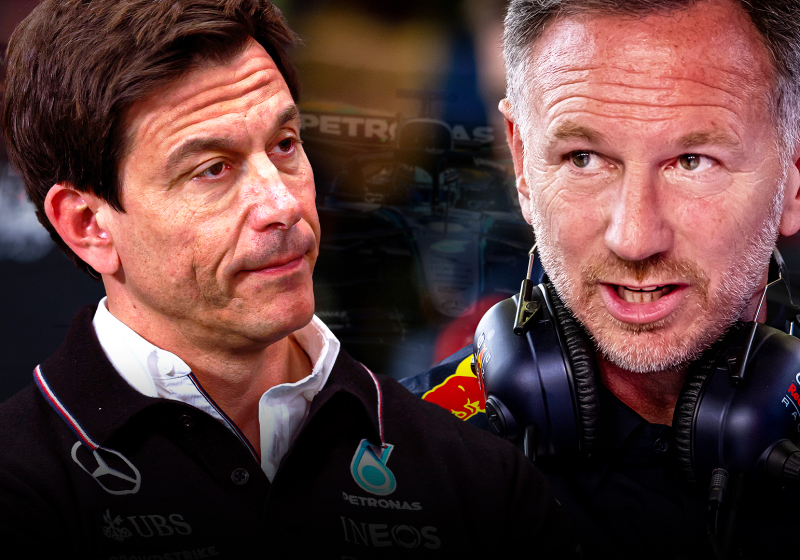
Christian Horner and Mercedes battle for Alpine F1 to be hijacked by New York Mets billionaire
 Aston Martin
Lance Stroll unleashes furious rant over Aston Martin car struggles
 Max Verstappen
BMW tease move for Max Verstappen after standout display
 GPFans Exclusive
EXCLUSIVE: Could Lewis Hamilton follow Verstappen to Nurburgring after GT3 buzz




Races
-
 Grand Prix of Australia 2026
-
 Grand Prix of China 2026
-
 Grand Prix of Japan 2026
-
 Grand Prix of Bahrain 2026
-
 Saudi Arabian Grand Prix 2026
-
 Miami Grand Prix 2026
-
 Grand Prix du Canada 2026
-
 Grand Prix De Monaco 2026
-
 Gran Premio de Barcelona-Catalunya 2026
-
 Grand Prix of Austria 2026
-
 Grand Prix of Great Britain 2026
-
 Grand Prix of Belgium 2026
-
 Grand Prix of Hungary 2026
-
 Dutch Grand Prix 2026
-
 Grand Prix of Italy 2026
-
Gran Premio de España 2026
-
 Grand Prix of Azerbaijan 2026
-
 Grand Prix of Singapore 2026
-
Grand Prix of the United States 2026
-
 Gran Premio de la Ciudad de Mexico 2026
-
 Grande Prêmio de São Paulo 2026
-
Las Vegas Grand Prix 2026
-
 Qatar Grand Prix 2026
-
 Grand Prix of Abu Dhabi 2026
Follow us on your favorite social media channel
Editorial & corporate information

Avenue HQ
10–12 East Parade
Leeds
LS1 2BH
United Kingdom Regional correspondence
View contact page