


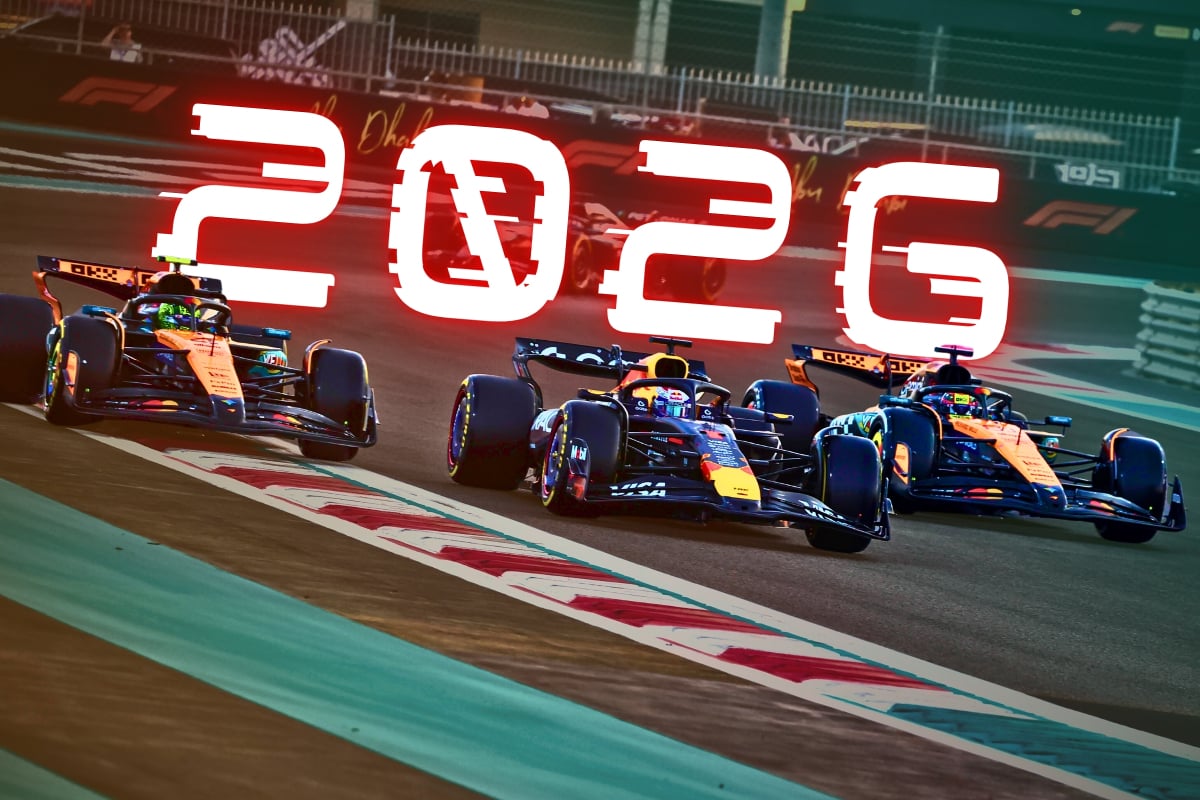

Yes, the new F1 cars actually come with hazard lights
F1 is heading into a new era in 2026
Fans may be surprised to learn that 2026 Formula 1 cars will include a feature commonly found on everyday road vehicles.
The upcoming season brings a sweeping set of new regulations, with the 2026 rule changes being among the most significant in the sport’s history.
Alongside a major overhaul of aerodynamics, power units are also being transformed. The new engines will run on 100% sustainable fuels and deliver a 50-50 balance between electrical energy and internal combustion power.
Cars will be smaller, lighter, more nimble and hopefully more able to provide us with better racing action, particularly around narrow street circuits.
And fans will likely notice that the cars look quite a bit different to the 2025 ground effect cars too, although they will still unmistakably look like an F1 car.
Of course, I jest, but the 2026 cars will have hazard lights attached to their wing mirrors, which will flash like hazard lights on a road car whenever they need to warn other drivers that the car is running slower than usual.
As in previous years of F1, there will also be flashing lights on the rear wing and the rear crash structure too, giving other drivers plenty of warning that the car ahead is not running as fast as it should be.
New car design features
While this improved safety is of vital importance, F1 fans will also be keen to know how the new aerodynamic rules will work when it comes to the 2026 F1 cars.
Cars will be lighter by 30kg in the 2026 season, the wheelbase will be reduced by 20cm and the car width will be reduced by 10cm.
The maximum floor width will also be reduced by 15cm, while the width of the front tyres will be decreased by 2.5cm and the rears by 3cm.
F1 front wings will be 10cm narrower and will feature a two element active flap. The rear wing will then have a three element flap and the lower beam wing has been removed.
The removal of this is key, to ensure that a following car will encounter less turbulence or 'dirty air', a major impediment to overtaking this past year.
The hope is that the new rules allow us to have closer racing, and that there will be fewer instances in this coming year where whoever is starting on pole remains largely unchallenged throughout the grand prix, as happened on several occasions in 2025.
Related
More F1 news
Full News Feed


Recommended by the editors






Races
-
 Grand Prix of Australia 2026
-
 Grand Prix of China 2026
-
 Grand Prix of Japan 2026
-
 Grand Prix of Bahrain 2026
-
 Saudi Arabian Grand Prix 2026
-
 Miami Grand Prix 2026
-
 Grand Prix du Canada 2026
-
 Grand Prix De Monaco 2026
-
 Gran Premio de Barcelona-Catalunya 2026
-
 Grand Prix of Austria 2026
-
 Grand Prix of Great Britain 2026
-
 Grand Prix of Belgium 2026
-
 Grand Prix of Hungary 2026
-
 Dutch Grand Prix 2026
-
 Grand Prix of Italy 2026
-
Gran Premio de España 2026
-
 Grand Prix of Azerbaijan 2026
-
 Grand Prix of Singapore 2026
-
Grand Prix of the United States 2026
-
 Gran Premio de la Ciudad de Mexico 2026
-
 Grande Prêmio de São Paulo 2026
-
Las Vegas Grand Prix 2026
-
 Qatar Grand Prix 2026
-
 Grand Prix of Abu Dhabi 2026
Follow us on your favorite social media channel
Editorial & corporate information

Avenue HQ
10–12 East Parade
Leeds
LS1 2BH
United Kingdom Regional correspondence
View contact page